As part of our Pathways to Oral Health initiative, on April 2, 2026, students in the Dental Hygiene program at Johnson County Community College had the opportunity to hear from Oral Health Kansas’ Education Coordinator Abby Richwine as part of an ongoing effort to reframe how future providers think about access to oral health care.
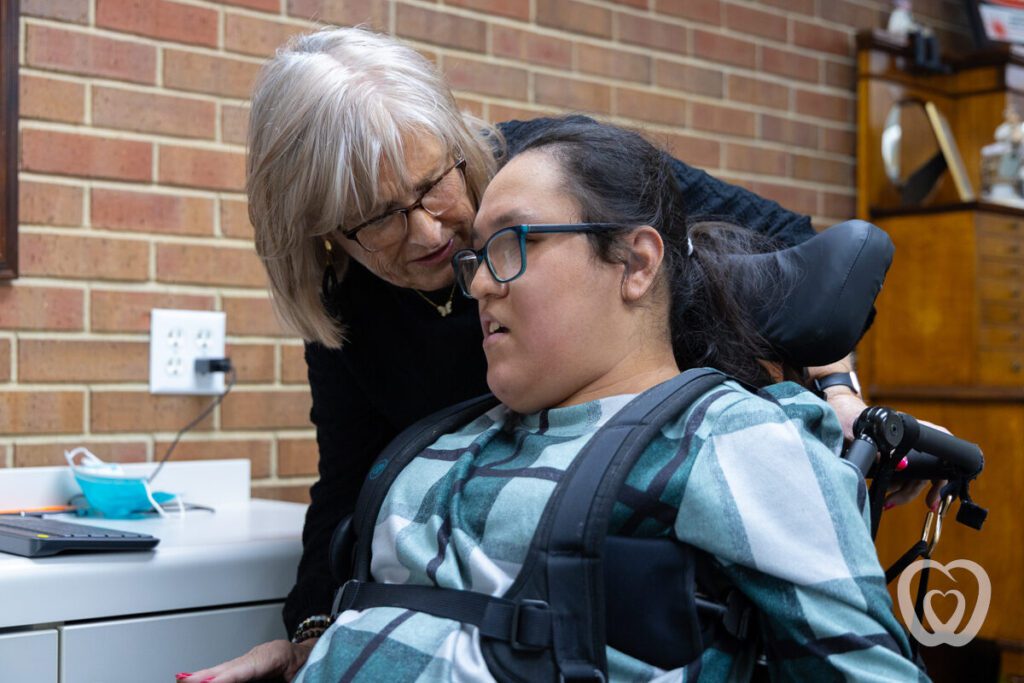
The goal of the presentation was simple but powerful: shift the focus beyond what happens in the dental chair and illuminate the barriers individuals with disabilities face before they ever walk through the door, as well as those they encounter once they arrive. Through storytelling, real-world examples, and practical strategies, students were challenged to think differently about their role—not just as clinicians, but as access points to care.
What stood out most was the depth of reflection from the students themselves.
One student shared a realization that captures a common gap in training:
“I mostly considered their experience after they have already crossed the dental threshold. Instead, they face multiple hurdles in order to merely show up.”
This shift in perspective is critical. Transportation challenges, lack of provider availability, insurance limitations, and the emotional toll of repeated rejection all create a layered set of barriers—especially for individuals with disabilities and their families. By recognizing these realities, future hygienists begin to understand that empathy starts long before an appointment begins.
Another student reflected on the emotional weight families carry when seeking care:
“The fact that the mother of a disabled patient had to call over 40 practices in a day… It should not be that hard and disheartening to try to access care.”
Moments like this underscore a key message of the presentation: even when a practice cannot provide care, offering guidance, referrals, or resources can make a meaningful difference. Access is not just about treatment—it’s about connection.
Perhaps most powerful were the reflections around self-doubt and professional responsibility. One student candidly acknowledged:
“I often talked myself out of attempting to treat patients with more complex needs… convincing myself that my lack of experience made me more of a liability.”
This honesty reveals a barrier that exists within the profession itself: fear. Fear of doing something wrong, of not being prepared, of stepping outside of comfort zones. But the presentation reframed that fear, not as a stopping point, but as a starting place.
As that same student concluded:
“Even if I am not very good at it at first, I will at least put myself out there and try my best.”
That willingness—to try, to learn, to say “yes”—is exactly what the oral health system needs.
Another student echoed this sentiment in a way that perfectly captures the heart of this work:
“It only takes one person to make a difference, and I can be that person.”
And that’s the point.
Improving access to care for individuals facing barriers—whether due to disability, socioeconomic status, or other systemic challenges—does not always require sweeping change. Often, it begins with small, intentional actions: adjusting an appointment approach, taking extra time to listen, offering flexibility, or simply being open to trying.
It takes creativity. It takes compassion. And sometimes, it just takes one provider willing to say “yes.”
At its core, this work is about building a more responsive and inclusive oral health system—one where patients are not turned away because they are perceived as “too complex,” but welcomed because they are worthy of care.
If these students carry forward even a fraction of what they reflected, the future of oral health care looks more accessible, more empathetic, and more equitable.
And that’s a powerful place to start. If you are a dental provider or student seeking resources to better support patients with disabilities, explore Pathways to Oral Health. We also offer continuing education opportunities designed to build your confidence and skills in caring for individuals with disabilities.