
As part of the Pathways to Oral Health initiative, we are continually inspired by partners who help drive meaningful change for Kansans with intellectual and developmental disabilities (IDD). One of those partners is the Kansas Council on Developmental Disabilities (KCDD), a statewide leader in advocacy, health equity, and systems change.
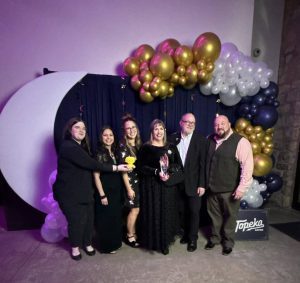
We recently sat down with Allyson McCain, Deputy Director; Whit Downing, VP of Policy and Programming and Self-advocate; and Lola Kernell, Advocacy Coordinator and Self-advocate. What followed was a powerful, honest discussion about their work, their lived experiences, and the shared mission to expand access to oral health care for people with disabilities.
Who Is KCDD? A Federally Mandated Voice for Change
KCDD is one of 56 Developmental Disabilities Councils across the country, supported by state-appointed council members. Their work is guided by a strategic plan with a simple goal: build an inclusive Kansas where people with disabilities have the same opportunities as everyone else.
Their work includes:
- Leading the statewide Health Equity & Outcomes Coalition, which brings together primary care providers, researchers, disability organizations, caregivers, and self-advocates.
- Creating plain language materials to empower people with IDD.
- Advocating at the Capitol on issues like the IDD waiver waitlist, the direct support workforce crisis, and access to health care.
- Training hundreds of advocates through Advocacy 101 workshops, the annual Speak Up Self-Advocacy Conference, and Day at the Capitol events.
Collaboration is at the heart of their mission—and why they are connected with Pathways to Oral Health.
Why Oral Health Matters: “Dentistry touches every part of health.”
Allyson shared that KCDD first connected with Pathways through the Health Equity Coalition, where primary care providers emphasized how oral health directly affects overall health. When they learned about the My Dental Care Passport and the education Pathways provided, they saw an opportunity to strengthen systems-level change.
“We heard what Oral Health Kansas was doing and thought, this is exactly the kind of partnership we need,” Allyson explained. “Oral health is essential, yet many people with IDD and Autism experience significant barriers in accessing it.”
Those barriers are very real, and deeply personal for Whit and Lola.
Lived Experience: “Fear is a barrier too.”
Whit shared openly about her own dental journey—one that included being dismissed from two dental offices as a child due to sensory needs and anxiety.
“I don’t like going to the dentist at all,” she said. “But the work you’re doing is so important. People with disabilities need dentists who understand IDD.”
With support from her primary care provider and self-advocacy, Whit recently returned to the dentist after nine years. She used laughing gas the first couple of visits, advocated for herself, and eventually felt comfortable enough to phase it out.
One detail stood out to her:
“It helped when the dentist said, ‘What I’m about to do is going to be loud.’ If he hadn’t told me, I might have jumped. Little things like that matter.”
For many people with disabilities, fear is a major barrier. “Sometimes it’s not the dentist—it’s the fear,” Whit said. “Social stories or videos could help people feel more prepared.”
Lola added that building trust makes all the difference:
“When you know your dentist and they talk to you about your life, you feel more comfortable. That relationship really matters.”
Systemic Barriers Are Still Significant
Together, the group discussed several persistent challenges for Kansans with IDD:
- Finding a dentist with experience in treating people with disabilities
- Finding a dentist who accepts KanCare
- Cost of sedation
- Past negative experiences
- Limited provider availability, especially in rural communities
These themes reinforce why Pathways continues to expand education for providers—and why collaboration with KCDD is so valuable.
How We Can Support Providers Together
When asked how Pathways could help dental providers feel more confident about treating people with disabilities, Allyson suggested opportunities for dentists to interact directly with people with IDD in low-pressure environments.
“Sometimes providers are worried they’ll do something wrong,” she said. “When they meet people with IDD outside of a clinical setting, they realize—they’re just people. They may need extra support, but relationship-building is key.”
Whit proposed a powerful idea:
Creating a plain language “Dental Toolkit” designed specifically for dental offices.
The toolkit could include:
- Understanding IDD and communication basics
- Sensory-friendly environmental adaptations
- Step-by-step “what to expect” visuals
- Tips for supporting anxious patients
- Best practices for welcoming patients from check-in through checkout
Lola explained how impactful it was when KCDD created a similar plain-language guide for women’s health. “A dental version would help people know what to expect,” she said.
This is exactly the kind of partnership Pathways hopes to build on.
Advocacy, Leadership, and the Power of Self-Advocates’ Voices
Near the end of our conversation, we asked Lola and Whit what they wished more people understood.
Whit shared:
“People with disabilities feel the same range of emotions as anyone else, we just may express them differently.”
She also opened up about how questions like “What’s your favorite?” can be overwhelming or irrelevant to some people with autism. “It doesn’t mean we don’t like things,” she said. “Just don’t ask us to choose.”
Lola emphasized employment and equity:
“Self-advocates deserve the same opportunities as everyone else—to work, to contribute, to be heard.”
She encouraged everyone to advocate for what they believe in and help create real change.
Looking Ahead: A Strong Partnership with Shared Purpose
KCDD is deep in preparations for the legislative session and their annual Day at the Capitol on February 11th, 2026 — major opportunities for self-advocates to influence policy and lead change statewide.
As Pathways to Oral Health continues its work, we are honored to partner with leaders like KCDD who bring lived experience, passion, and policy expertise to the table.
Help us in the pursuit of more accessible oral health in Kansas and ask your dentist to join the Medicaid network. Visit pathwaystooralhealth.org for more information and our Consumer Advocacy Toolkit for Recruiting Dentist for a step-by-step guide to advocate for oral health access across Kansas.