For Melanie Jacobs, oral health isn’t just about smiles, it’s about survival.
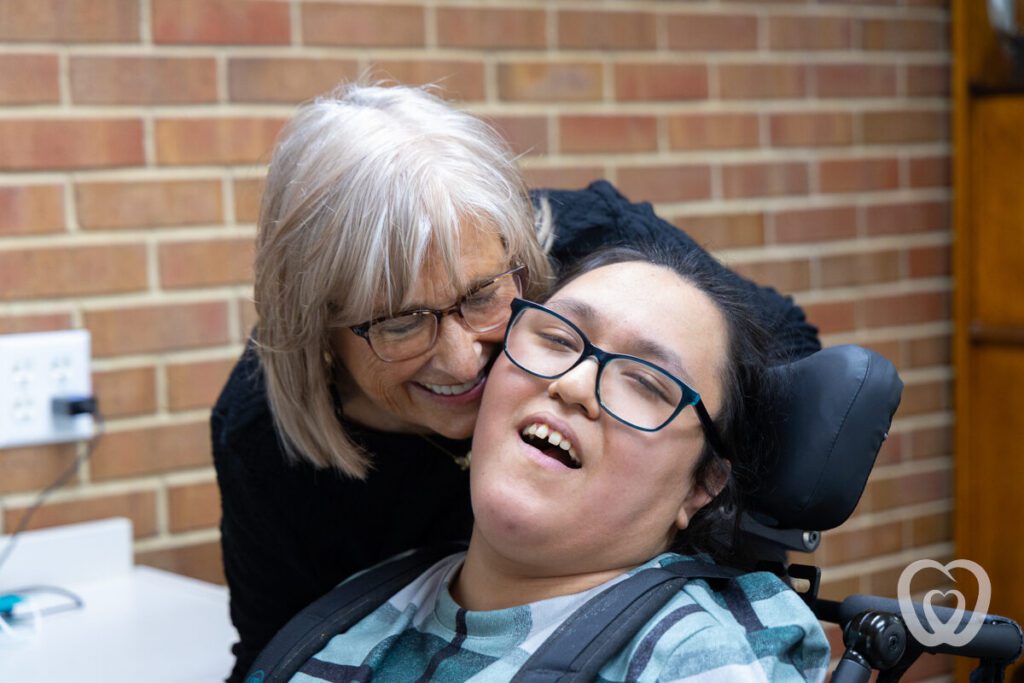
Her daughter, Sandra, lives with quadriplegic cerebral palsy and other complex medical needs. She’s nonverbal and highly sensitive to discomfort, making it difficult to know when something is wrong. But one thing is clear: without access to quality dental care, Sandra’s health would be at serious risk.
“Without oral health, she would be in a world of hurt,” Melanie shared.
For families like the Jacobs, dental care is often hard to access. The search for a provider who accepts Medicaid, has the right training, and is willing to care for patients with intellectual or developmental disabilities can feel never-ending.
That’s why finding Dr. Nick Rogers changed everything.
A Door That Opened When Others Closed
Dr. Rogers is a general dentist in Arkansas City, Kansas, whose practice has always been open to Medicaid patients. He understands that the extra time and skill sometimes required to treat patients with special needs is not a burden, it’s part of his role in the community.
“When you start seeing Medicaid patients, you have to have a staff that embraces that as well,” he said. “Fortunately, our office is big enough where we have the personnel to devote time to Medicaid. It’s really pretty easy.”
It’s not uncommon for families to encounter closed doors when seeking care, especially for children and patients with disabilities who rely on Medicaid. But Dr. Rogers’ office took a different approach.
“When we found Dr. Rogers,” Melanie said, “he came in and said everything went fine. He told us Sandra was precious.”
Through regular six-month checkups covered by Medicaid, Sandra’s oral health is maintained, keeping cavities at bay, infections prevented, and complications avoided. For someone who can’t express where or when she’s in pain, that’s life-changing.
The Power of Respect and Relationship
For Dr. Rogers, this work is personal.
“Our community is blue collar, low socioeconomic. About 70% of our kids are on free and reduced lunches, which means over 70% have a medical card,” he said. “And in a small town, they’re my grandchildren’s best friends. They’re the kids I sit next to in church. Their parents are in the grocery store. They’re my community.”
That deep connection to place and people is what drives him.
“I feel strongly responsible for their care. As a professional, I have to advocate for them. I have to offer them the same respect I’d offer to anybody who walks through the door—whether it’s the president of the bank or a Medicaid patient with special healthcare needs.”
That respect and preparation are exactly what the My Dental Care Passport is designed to support. As part of the Pathways to Oral Health initiative, the Passport helps families like the Jacobs communicate Sandra’s unique needs before an appointment ever begins. From sensory sensitivities to preferred positioning, it ensures providers are ready, allowing them to focus on building trust.
A Smile That Says Everything
“Having the appointments every six months, knowing Medicaid is going to cover those cleanings. It’s a world of help,” Melanie said. “You’ve seen the way Sandra reacts. That makes it all worthwhile.”
Every dental chair tells a story. And for patients like Sandra, that story is one of care, courage, and the quiet power of doing what’s right.
To download the My Dental Care Passport or learn more, visit www.PathwaysToOralHealth.org